
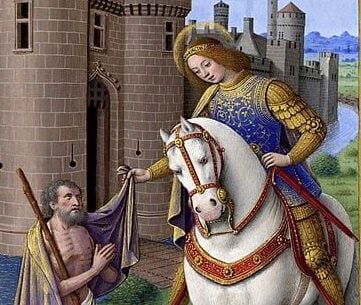
St. Martin of Tours was born around 316 in what is now Hungary. The son of a Roman soldier, he was required to serve in the army himself, though his heart was drawn to Christ. While stationed in Gaul, he famously encountered a poor beggar shivering in the cold. Moved with compassion, Martin cut his military cloak in half and gave it to the man. That night, Christ appeared to him in a dream wearing the cloak, affirming Martin’s act of charity. After leaving military service, Martin became a monk and later the bishop of Tours in France. He worked tirelessly to spread the faith, establish monasteries, and care for the poor. Though reluctant to take high office, his humility and service made him a beloved shepherd of souls. Martin died in 397, and he is honored as one of the first non-martyr saints venerated by the Church.
Practical Lessons
- Practice Everyday Charity: Martin’s simple act of sharing his cloak reveals that holiness begins with small gestures of love. We can imitate him by noticing the needs around us—whether buying a meal for someone hungry or offering encouragement to someone discouraged.
- Live Faithfully in Every Vocation: Though first a soldier and later a bishop, Martin remained committed to Christ in every stage of life. In our own lives, we can strive to live faithfully whether we are at work, at home, or in positions of leadership.
- Lead with Humility: Martin did not seek honor or recognition but accepted leadership as service. Today, this challenges us to approach authority and responsibility with humility, focusing on the good of others rather than personal gain.
Prayer
St. Martin of Tours, generous servant of Christ, help us to love as you loved and to serve with humility and compassion. Intercede for us, that we may recognize Christ in the poor and respond with open hearts. Pray that we may remain faithful to God in all circumstances of life. Amen.
Quote
“Lord, if Your people still need me, I do not refuse the work. Your will be done.” — St. Martin of Tours
Other Saints We Remember Today
St. Mennas (3rd Century), Martyr
Image by Jean Bourdichon via Wikimedia Commons
