We would probably agree that the biblical concept of time is not like a circle, which repeats round and round, never having anything new. The biblical concept of time is linear, with a beginning, a process, and an end. In fact, I think it may be more accurate to say that “time is like a spiral” because while there is a cycle year by year, it is not a self-perpetuating circle but one that moves like a spiral toward the goal.
In the final stage of a liturgical year, the Church asks us to meditate on the end times. Now, a new liturgical year
also begins with the end times’ theme. This connection is manifested in the liturgical arrangement. Advent is divided into two periods: in the beginning, the first period, the liturgy wants us to look forward to the glorious coming of the Savior and then gradually shift our attention to Jesus’ coming two thousand years ago. The next period (starting from December 17) is the preparation for the coming Christmas.
Looking forward to the glorious coming of the Savior can be regarded as a “normal task” of the Church after Jesus’
Ascension. Being well prepared for Advent is essential, and we believers should always keep that in mind. Of course, it is crucial to cultivate such an eschatological tension.
The temple of the Lord upon the high mountain is the home of all nations. The prophet said, “Come, let us go up to the mountain of the Lord, to the house of the God of Jacob” (Isa. 2:3). “I was glad when they said to me, ‘Let us go to the house of the Lord!’ Our feet have been standing within your gates, O Jerusalem!” (Ps. 122:1–2).
Does this psalm bring the hope of the beginning and the joy felt upon arrival too close together? No. It brings out the mystery of the Church: in the Church, “have been” and “have yet to come” are two inseparable aspects. “Advent,” of course, emphasizes anticipation. We are hoping for Jesus the Savior, who was incarnated, died for us, and rose for us two thousand years ago. With that “have been” there is the “have yet to come”—for Christ has accomplished salvation for us, and we look forward with confidence to His glorious coming, to the successful fulfillment of our salvation.
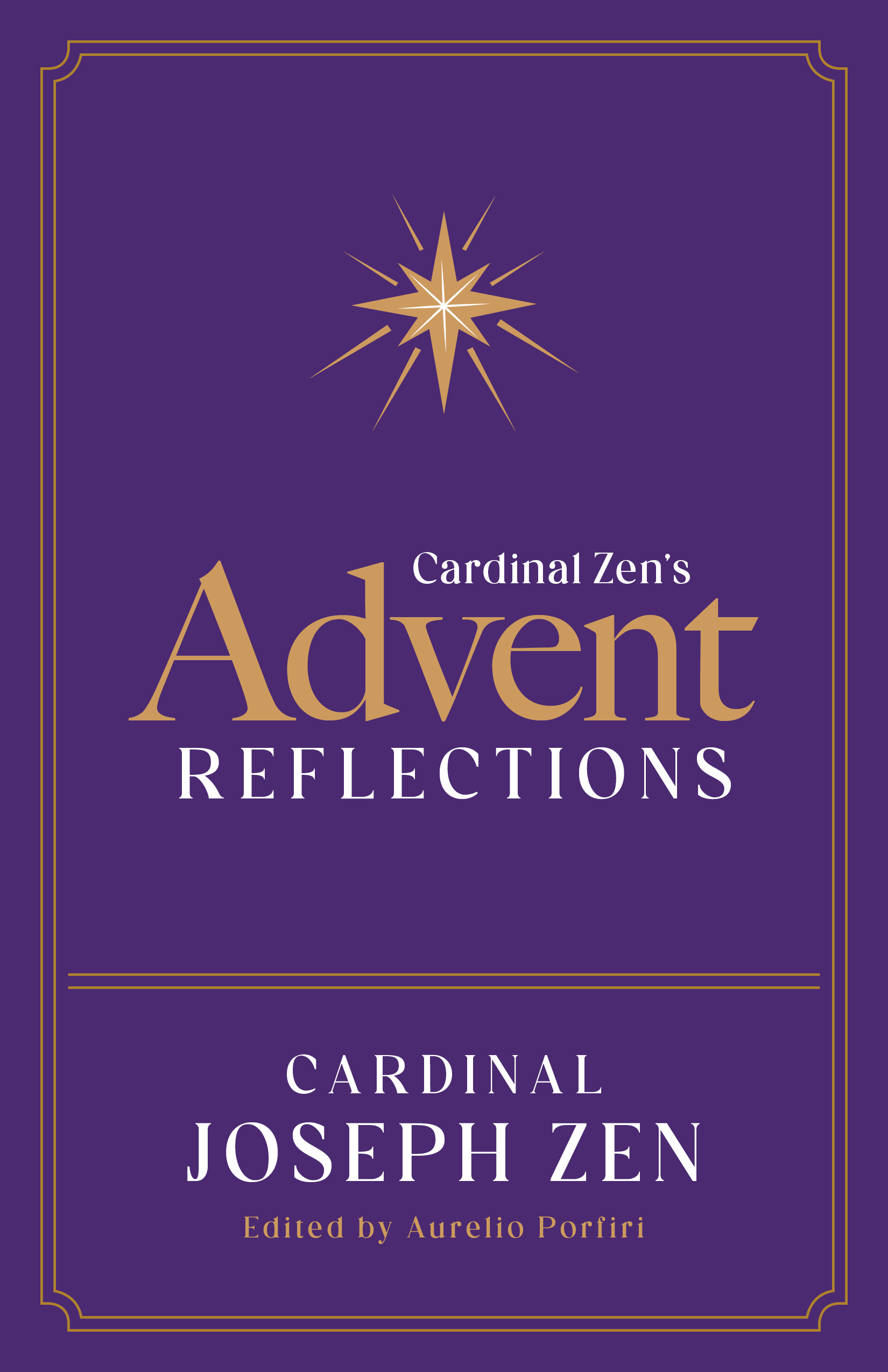
Editor’s note: this article is excerpted from Cardinal Zen’s Advent Reflections, available now from Sophia Institute Press.
Image: Hans Thoma, Angel with the star of Bethlehem, National Museum in Warsaw. Public domain.