
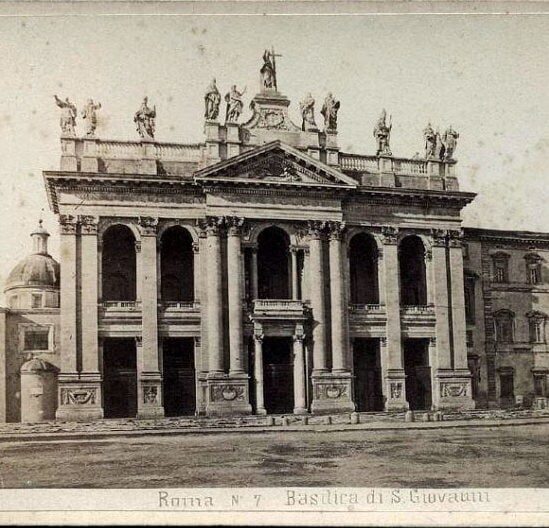
The Dedication of the Basilica of St. John Lateran is celebrated on November 9 and honors the cathedral church of Rome, the official seat of the Bishop of Rome, the Pope. Built in the fourth century by Emperor Constantine, it is the oldest and highest-ranking of the four major basilicas of Rome. Dedicated first to Christ the Savior and later to St. John the Baptist and St. John the Evangelist, it is considered the “mother and head of all the churches in the city and the world.” Though the building itself has faced fires, earthquakes, and reconstructions, its dedication reminds the faithful that the Church is not only a physical structure but the living Body of Christ. This feast celebrates the unity of all Christians with the Pope and with one another through the Church universal.
Practical Lessons
- Value the Church as Home: Just as the Lateran Basilica stands as a mother church, we are reminded to treat our own parish church as a sacred home—a place to pray, serve, and gather as a family of faith.
- Remember We Are the Living Church: The dedication points to the deeper truth that each of us is a temple of the Holy Spirit. In our daily lives, we are called to keep our “inner church” pure through prayer, virtue, and the sacraments.
- Stay United in Faith: The Lateran Basilica symbolizes unity with the Pope and the worldwide Church. Today, this lesson calls us to pray for our Holy Father and strive to remain faithful to the teachings of the Church in charity and obedience.
Prayer
God our Father, You have made the Church Your dwelling place on earth and united us as living stones in the temple of Your Spirit. Through the intercession of St. John the Baptist and St. John the Evangelist, may we remain strong in faith, devoted in worship, and steadfast in unity with the Church throughout the world. Amen.
Quote
“You are God’s building… Do you not know that you are God’s temple and that God’s Spirit dwells in you?” — (1 Corinthians 3:9, 16)
Other Saints We Remember Today
St. Theodore the Recruit (306), Martyr
Image by Pompeo Molins (1827-1893) via Wikimedia Commons
