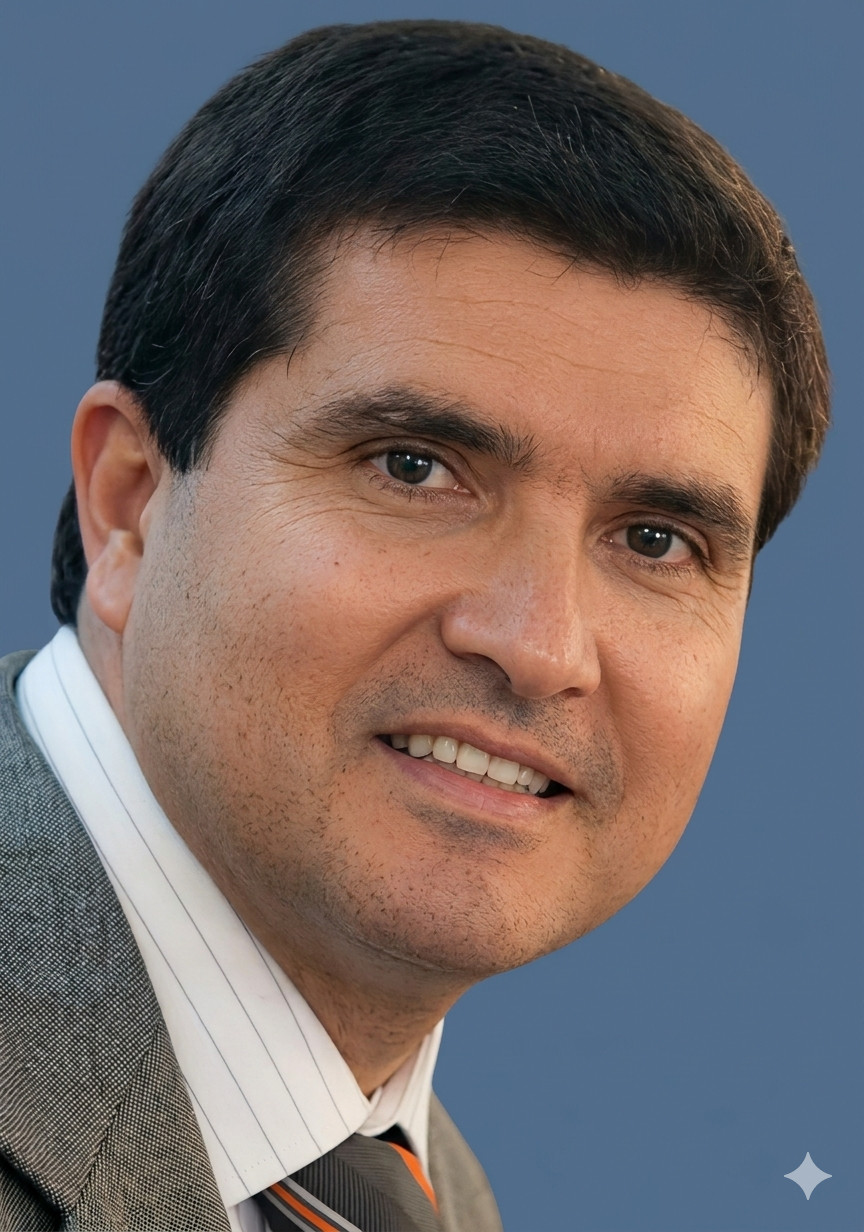
Blaise Pascal was one of the most remarkable minds of the seventeenth century. A mathematician, physicist, philosopher, and writer, he devoted his life to exploring both the mysteries of nature and the deepest questions of human existence. Born in Clermont-Ferrand, France, in 1623, Pascal displayed extraordinary talent from an early age. At sixteen, he had already produced important work in geometry, and later he made significant contributions to the study of atmospheric pressure, fluid mechanics, and probability theory.
Yet Pascal was much more than a scientist. He was deeply concerned with the human condition and the search for meaning. He observed that people often spend their lives pursuing wealth, pleasure, or success, believing these will bring happiness, yet they frequently remain unsatisfied. This led him to what he considered the most important question of all: Does God exist? And if we cannot know the answer with certainty, how should we live?
His most famous reflection on this issue is known as Pascal’s Wager. It is not a proof of God’s existence. Rather, it is an argument about rational decision-making under uncertainty. Pascal asks a practical question: if we cannot know with certainty whether God exists, what is the most reasonable choice to make?
The argument begins with a simple observation. Human beings constantly make important decisions without having complete information. People invest money, choose careers, and enter relationships without knowing exactly what the future holds. According to Pascal, the question of God’s existence can be approached in the same way: by considering possible outcomes and their consequences.
Pascal reduces the issue to two possibilities: either God exists or God does not exist. Every person must choose whether to believe or not believe.
If God exists and a person believes, the outcome could be the ultimate reward: eternal life and perfect happiness. If God exists and a person does not believe, they risk losing that reward. On the other hand, if God does not exist, the consequences are finite. A believer may have devoted time and effort to religion, but may also have gained moral guidance, hope, purpose, and a sense of community during life.
From Pascal’s perspective, the calculation seems straightforward. A finite commitment—a life of faith—offers the possibility of an immeasurable reward. Even without certainty, the potential gain is so great that belief appears to be the rational option.
The wager can be summarized in four scenarios:
- God exists and a person believes: the result is an infinite reward.
- God exists and a person does not believe: the person loses that possibility.
- God does not exist and a person believes: the loss is limited, while religious life may still provide values, discipline, and meaning.
- God does not exist and a person does not believe: the person simply lives without religious faith.
Looking at these possibilities, Pascal concludes that believing in God is the safer and more rational choice because the possible benefit vastly outweighs the possible cost.
However, Pascal recognized an important objection. A sceptic might say: “I cannot simply choose to believe because belief does not work that way.” Pascal accepted this difficulty. He did not claim that genuine faith could be created by a simple act of will.
Instead, he suggested that a person who finds the wager persuasive should begin living in a way that opens the possibility of faith. They should reflect, engage with religious practices, and explore spiritual ideas. In this sense, reason may lead someone toward faith, even if it cannot produce faith on its own.
This relationship between reason and faith reflects Pascal’s own life. During his youth, he was one of Europe’s leading scientific thinkers. He invented the Pascaline, one of the earliest successful mechanical calculators, and his experiments on pressure and the vacuum helped lay foundations for modern physics.
Later in life, Pascal underwent a profound religious experience that transformed his outlook. He became increasingly devoted to Christianity and wrote extensively about faith, morality, and human nature. Much of this work survives in Pensées (Thoughts), a collection of notes published after his death.
A central theme of Pascal’s philosophy is the paradoxical nature of humanity. Human beings are tiny when compared with the vast universe, yet they possess a unique greatness because they can think and reflect on their own condition. For Pascal, true dignity comes from recognizing both our limitations and our desire for something beyond material success.
Over the centuries, Pascal’s Wager has generated both admiration and criticism. Supporters argue that it offers a clever way to make decisions when certainty is impossible. Critics, however, point out that believing solely because it seems advantageous may not constitute genuine faith.
Another well-known criticism is the “Many Gods Objection.” If several religions offer different understandings of God and salvation, it is not clear how Pascal’s reasoning can determine which religion should be chosen. Others argue that the wager simplifies a much more complex philosophical and theological problem.
Despite these criticisms, the enduring importance of Pascal’s argument lies not only in its conclusion but also in the question it raises. Human life is full of uncertainty. In many of our most important decisions, complete certainty is unattainable, yet we must act nonetheless. Pascal suggests that the question of God belongs to this category.
His wager also reminds us that refusing to choose is itself a choice. To live as though God does not matter is already to adopt a position on the issue. Neutrality, Pascal argues, is ultimately impossible.
In conclusion, Blaise Pascal was a thinker who uniquely combined science, philosophy, and religion. His wager does not attempt to prove God’s existence. Instead, it asks how a rational person should act when certainty is unavailable. Whether one accepts or rejects his conclusion, Pascal’s challenge remains relevant today: in a world filled with uncertainty, we must all decide what we are willing to risk, what we hope to gain, and what kind of life we choose to live. Ultimately, Pascal’s Wager is not only about God—it is about how human beings confront the unknown.
Photo by Myles Bloomfield on Unsplash