In the collection of Eastern monastic writings called the Philokalia, the goal of the spiritual life is clear: “We must make ourselves a dwelling place for the Holy Spirit,” writes St. Diodachos of Photiki. This directive to enshrine the Holy Spirit in oneself is consistent throughout the collection, and the way to achieve such a lofty purpose is by total surrender to the Divine Will through a focused, serene prayer life. It is no coincidence that the iconographic tradition emerged from this theology of serenity. Icons, as a liturgical art of great significance, are meant to attune the soul to surrender and break open the heart to God’s mercy.
It would not be fitting to place iconography as simply one of many art forms in human history. Icons are meant to be prayed with as liturgical art in the context of the Mass. These sacred images are representative not of earthly reality obscured by sin and death, but of a transfigured reality. In his tour de force work The Meaning of Icons, Leonid Ouspensky articulates the purpose of icons as a direct result of the Incarnation:
Through the Incarnation of the Son of God, man received the possibility not only to restore his likeness to God with the help of the grace of the Holy Spirit, that is, to make an icon of himself by inner doing, but also to reveal his grace-given state to others in word-images and visual images…. Thus holiness is the realization of possibilities given to man by the Divine Incarnation, an example to us; the icon is the means of revealing this realization.
Simply put, icons are both a response to the Fall in the Garden of Eden and a physical reminder of the balm of the Passion and the transformative joy of the Resurrection. The rich grandeur of this sacred tradition is an illumination of each individual person’s redemption by Jesus, Who is both God and flesh-and-blood Man. It is a sacred duty of the iconographer, therefore, to create works that maintain theological correctness as well as reveal the astounding nature of divine possibility from our salvation.
The trademark elements of iconographic images, namely line and perspective, synchronize to give the viewer a taste of transfiguration and relationship with the Divine. For instance, the arresting and deliberately unrealistic perspective of a traditional icon guides every element in an icon to reach for the viewer. As George Kordis writes in his work Icon as Communion:
In Byzantine culture, a work of art is not a passive and abstract object that is in front of the viewer in his own time and space; on the contrary, it is something active that moves toward the viewer, from whom an answer is required…
Beholding an icon, therefore, is entering into a dialogue; it is an asking and a listening. The striking lines of an icon guide the viewer’s focus in this way as well. The very lines of a saint’s garments often seem to cause the saint to lean out of the picture. The icon is not so much about the saint as it is about conveying that the viewer is its center of attention; indeed, the viewer is the one who is being gazed upon by heaven and invited to join in the Beatific Vision.
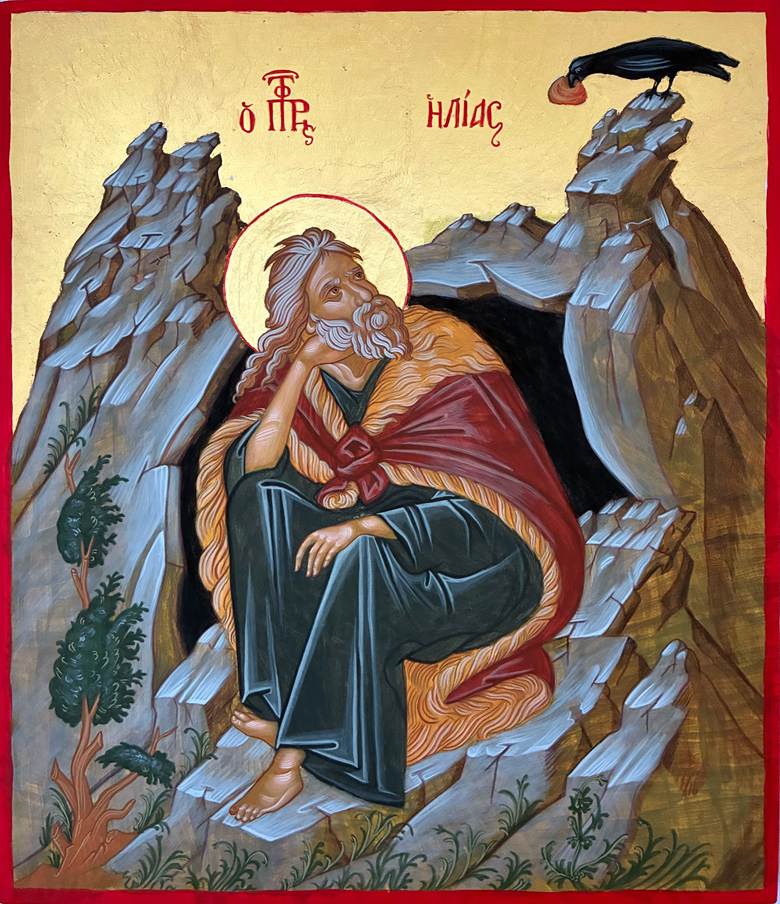
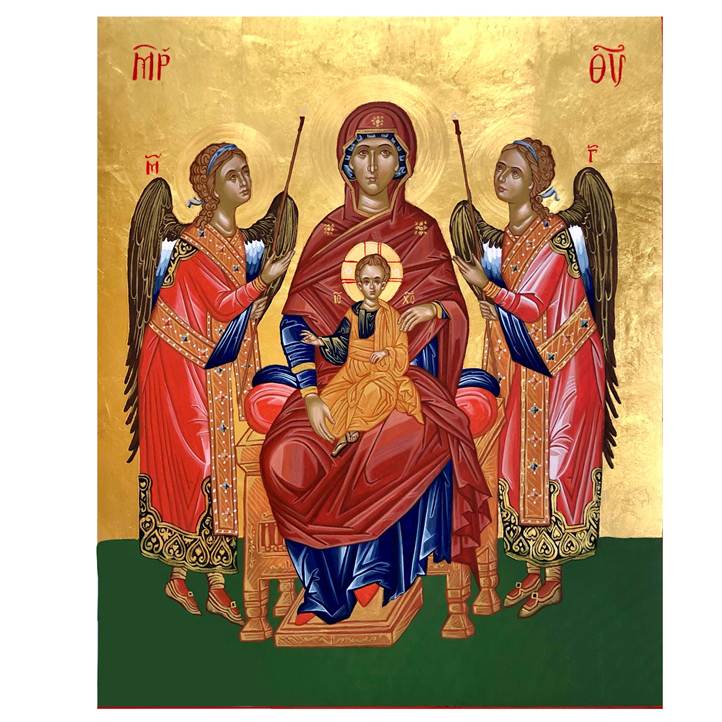
In keeping with the emphasis on theological truths, iconography is built on a foundation of traditional prototypes, which, despite war, iconoclasm, and anti-Christian sentiment, have withstood the test of time. A traditional icon, or a prototype, remains the same because it represents a unique person with features specific to him or her. The copying of an icon is a way to acknowledge the reality of this individual, and, more importantly, the belief that this person is now a saint. For example, even if posture varies, it is easy to recognize the Virgin Mary across iconographic tradition with the three stars on the forehead and shoulders of her veil which represent her perpetual virginity before, during, and after the birth of Christ. Dedication to prototypes does not mean there is no creativity within the Byzantine icon tradition—but writing an icon, like copying Scripture in an illuminated manuscript, must be a measured, careful endeavor.
In fact, an icon is said to be “written” because praying with an icon should be a similar experience to encountering the Word in Sacred Scripture and the lives of the saints. Very like in the divinely inspired Word of God, the message of God’s love greets the viewer of an icon in a dynamic, captivating moment of grace for which every heart longs. When “read” honestly, an icon will reveal the same message of the Good News: God has made you—specifically—and He finds you good and wants you to be happy with Him forever.
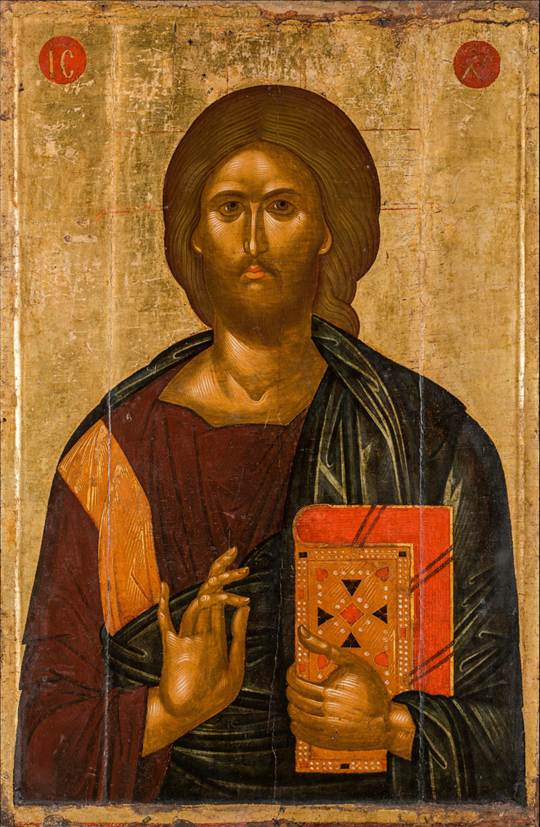
St. John Damascene, master defender of the iconographic tradition, writes of holy images:
I have looked upon the human form of God, and my soul has been saved. I gaze upon the image of God, as Jacob did, though in a different way. Jacob sounded the note of the future, seeing with immaterial sight, whilst the image of Him who is visible to flesh is burnt into my soul.
The sacramental power of icons is nothing short of metanoic. And the veneration of holy images is a serious matter of right worship. Beholding an icon, locking eyes with the image of the saint in it, and placing one’s whole self in prayer—this is how to remember that the Word chose to dwell among His creatures and call them His children. Prayer before an icon is both a physical and spiritual sign that a person is willing to accept God’s love. This is the way, at once simple and glorious, to prepare a dwelling place for the Holy Spirit in the heart. Such is an act of total, beautiful surrender.