
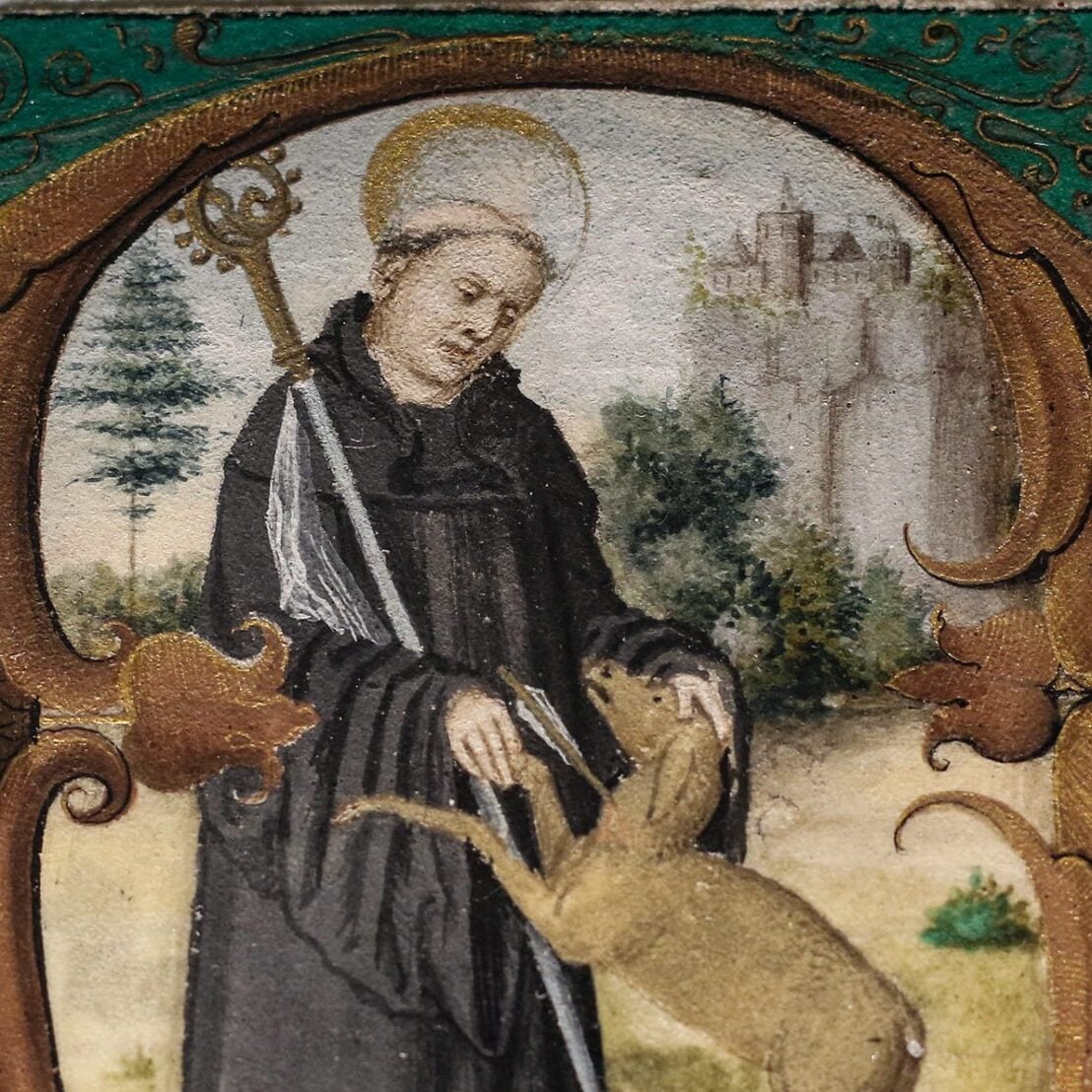
St. Giles was born in the 7th century in Athens, Greece, but later settled in southern France. Known for his humility and holiness, he lived as a hermit in the forests near Nîmes. Tradition holds that he survived in solitude for years, sustained by prayer and by the milk of a hind (a female deer), which became one of his symbols. His reputation for sanctity spread, and many sought his guidance. Reluctantly, he became abbot of a monastery that grew around him, where he established a community dedicated to prayer and service. St. Giles was known for his compassion, especially for the poor and those burdened by sin. After his death around 710, devotion to him spread across Europe, and he became one of the most popular saints of the Middle Ages, invoked as one of the Fourteen Holy Helpers. He is remembered as a patron of the disabled, the sick, and those seeking God in hidden ways.
Practical Lessons
- Care for the Vulnerable: St. Giles’ compassion for the poor and suffering calls us to practical acts of kindness—visiting someone who is ill, supporting the disabled, or offering help to those on the margins. Small, concrete acts of service can reflect God’s love in everyday life.
- Seek Quiet Time with God: His life as a hermit teaches us the value of setting aside time for silence and prayer. In a busy modern world, even 10–15 minutes each day without screens or noise can help us reconnect with God and find peace.
- Live Simply: St. Giles chose a humble life, focused on what mattered most. For us, this can mean decluttering our homes, reducing unnecessary spending, or choosing gratitude over constant striving. Simplicity creates more room for God and others in our lives.
Prayer
St. Giles, faithful servant of God and friend of the poor, pray for us. Help us to care for the vulnerable with love, to seek quiet time with God each day, and to live simply in a way that honors Him. Intercede for us, that we may grow in humility and holiness, and bring Christ’s compassion to those we meet. Amen.
Quote
“Let us care for the weakest, for in them Christ Himself comes to us.” — St. Giles
Image by Fr. Lawrence Lew, O.P. via Flickr
