Did you know that the Mass is a time machine?
I’m not speaking in figurative language here. A form of mystical time travel takes place at every single Catholic Mass. Only the Mass doesn’t transport us back in time to the moment when Christ was crucified; it transports the moment of the Crucifixion forward in time to us—so that we can experience that monumental, life-saving event in our present-day lives.
When you attend Mass, the place in which you are standing is not simply another building, not simply another Christian church or religious temple. It is a special chamber built for spiritual time travel. At the moment of consecration, the Cross and the Crucifixion are brought from the past and planted right there in the church, on that symbol of Calvary, the altar. Though they are invisible to the eye, the same Crucifixion that took place two thousand years ago and the very same Jesus Christ who was killed two thousand years ago are present in front of you.
Remember, Christians believe that Jesus is God. Yes, Jesus was also a man, and as a man, He lived and walked in ancient Palestine. But as God, He stands outside time and space. As God, He is not bound by the rules of the clock. He is not bound by the rules of geography. During the Mass—in some miraculous way we can never fully understand this side of Heaven—the eternal God-Man “transports” Himself at the exact moment He sacrificed Himself on the Cross, to this very moment, now.
Let me put it another way.
If you lived two thousand years ago and stood among the Israelites and Romans that sad and tragic Friday afternoon that we now call “Good,” you would have seen Jesus Christ killed. But if, at the moment of His death, you closed your eyes and covered your ears with your hands to block out all the extraneous details, you would have had the same exact experience that a Catholic has at Mass every Sunday. Likewise, if you attend Mass on a Sunday morning, and close your eyes and cover your ears at the moment the priest says the words, “This is my Body, which is given up for you” and holds the Host above his head, you will be experiencing the very same Crucifixion that occurred on Calvary two thousand years ago.
It won’t look the same. It won’t sound the same. It won’t be brutal and bloody and agonizing. But it nevertheless is the same. The Crucifixion is equally present—despite appearances. As the Catechism of the Catholic Church (CCC) teaches clearly in paragraph 1323: Jesus instituted the Mass “in order to perpetuate the sacrifice of the cross throughout the ages until he should come again.”
Are you getting it? The Mass is not a “replay” of a historical event. Nor is it Christ’s sacrifice somehow repeated. Jesus died only once. He sacrificed His life for us only once. The Mass is not a do-over. It’s the same Crucifixion. The same sacrifice. The same Jesus—now acting in the person of the priest. That once-and-forever sacrifice has been mystically transported across the millennia, by the time machine known as the Mass. That’s why it doesn’t matter so much to faithful Catholics if the singing at Mass is bad, or if the preaching is boring, or if the interior of the church is ugly. They’re not there for any of that. They’re there to be present at the Crucifixion.
Now why would anyone want to be present at the Crucifixion? It would take a whole book to explain adequately, but here’s the main idea in a nutshell: Catholics want to be present at the Crucifixion of Christ so that they can also experience the Resurrection of Christ.
Everyone in life is carrying some kind of cross, right? Don’t you have a cross? Maybe you’ve got some major health problems. Maybe you’ve got some serious financial challenges. Maybe you’re very insecure or lonely or depressed. Maybe you have a terrible temper. Maybe your libido is out of control. Maybe you’ve done some bad things that are causing you tremendous guilt. Maybe you’ve even confessed your sins and been forgiven, but the guilt still won’t go away. Maybe your body is your cross. Maybe your job is your cross. Maybe your marriage is your cross. Maybe your kids are your cross. Maybe your whole life is your cross!
Fulton Sheen said that when Catholics go to Mass, we bring our crosses to the church with us. All those small and large crosses are in the church, in the pews beside us. At the moment of consecration, when the giant cross of Christ is brought forward through time and planted on the altar in front of us, it’s not alone in the church. It’s surrounded by all our crosses, too.
But what happened to Jesus Christ after He died on His Cross? He rose from the dead, didn’t He? He rose in power and glory. He ascended into Heaven. That’s the whole point of Christianity, isn’t it? Well, the whole point of the Mass is that we get to join with Christ in what He did. We get to participate in His sacrifice in a profoundly meaningful and mystical way. We get to offer our own lives, our own problems, our own crosses, to Him, and He, in turn, accepts that offering, and joins our crosses to His, making it possible for us to experience rebirth and resurrection too—just as He did.
Do you see why the Mass is so important? By virtue of this miraculous time machine, human beings are not only able to be present at the Crucifixion; we’re able to plug into the power of the Resurrection, the power of new life, the power of Heaven. Do you think that might be something valuable to you as you try to overcome the problems of life?
But how, exactly, do you plug into this amazing power source? The best way is by worthily receiving the sacrament of the Eucharist. The Catholic Church teaches that the Eucharist is really and truly God. It is God made Man. It is the Body, Blood, Soul, and Divinity of Jesus Christ. It’s not a symbol. It’s not pretend. It’s not some pious practice. It’s not some meaningless ritual. It is the Lord, miraculously present—and also miraculously hidden—under the appearances of bread and wine—i.e., the color, taste, feel, smell, and molecular structure of bread and wine.
That’s why the miracle that happens at the moment of consecration is called transubstantiation—the transfer or conversion of the substance of bread and wine into the substance of the Body and Blood of Christ. If you’ve ever received Communion at a Catholic Mass, please understand that, in doing so, you have never once eaten bread or drunk wine. You have taken God into your body. It is God that you have consumed.
Now, why would you want to consume God?
The theologically precise answer is that by consuming Christ’s Body and Blood, we become united to the person of Christ, and in being united to Christ, we are united not only to His humanity but also His divinity. Our mortal and corruptible natures are transformed by being joined to the source of all life—indeed to Life itself.
In everyday language, this translates into: You are what you eat!
Think about it. When you consume things that are bad for you, such as sugar and candy and fast food and junk food, your body is negatively affected, isn’t it? Not only will you get heavy, but you’ll start having all kinds of health problems. It’s a simple fact that the worse you eat, the more your body deteriorates. In fact, it’s not an exaggeration to say that if you eat garbage long enough, your body will turn into garbage.
The opposite is also true. If you drink lots of water and eat lots of vegetables and nutritious whole foods, chock-full of essential vitamins and minerals and antioxidants, your physiology is going to improve—not only on the outside, but on a cellular and molecular level.
Well, what do you think happens if you consume God? What do you think happens if you receive Communion on a regular basis, in a morally upright, faith-filled manner? You’re going to become more like God. You’re going to be lifted into a higher kind of life; a different way of life, a life that Christ described in the Gospels as “the Kingdom of Heaven.” This is not only a life of increased virtue but a life of great power—power to follow the Golden Rule, power to love your enemies, power to bring peace wherever there is strife, power to accomplish things that seem absolutely impossible; a life characterized by humility, truth, beauty, goodness, and countless miracles; an immortal life that continues beyond the grave into eternity in Heaven. Most importantly, it is a life characterized by extraordinary closeness to God.
I’ll give you another way to look at it. Let’s say you have a good friend who decides to move to the other side of the world, to a place you have no way of traveling to, for financial reasons or otherwise. Of course it’s still possible to be friends with that person. You can call him on the phone, or you can send him letters or e-mails. But what if years go by and this friend never once visits you? What if you never see this friend in the flesh, or break bread with him, or speak to him in person? Yes, the friendship could endure. But how close could it really be? Wouldn’t it be missing something? Something important?
That something is physical contact. You and I are human beings. We’re not computers. We’re flesh-and-blood creatures that have immortal souls. We need to have personal connection for us to remain close to one another—not just text messages!
The same is true for our relationship with the Lord. Yes, we can pray to Him anytime we want. God loves it when we pray to Him. And He’s happy to speak to us and listen to us anytime, night or day. There are many people in the world who stay close to God by simply keeping up this regular, prayerful contact. But it’s still sort of like making a phone call to Heaven.
God understands our need for something more. He understands our need for personal contact. So while He encourages and even commands us to pray to Him, He also offers us something deeper. Through the Eucharist, he offers us a profound personal, spiritual, and physical connection with Him as well.
That’s closeness. That’s intimacy. That’s true personal relationship. And that’s the kind of relationship every Catholic in the world can have with God because that’s what the Eucharist is all about. The Eucharist is truly the “source and summit of the Christian life” because it contains “the whole spiritual good of the Church”—because it contains Christ Himself (CCC 1324).
Don’t deprive yourself of that sacrament! If you’re a Catholic who has been away from the Church for a while—and if you really want to radically change your life for the better—I urge you to make a decision now to go to Confession and have your serious sins absolved by an ordained Catholic priest. Then, when you attend Mass, at the proper time bow your head, make the Sign of the Cross, and humbly, respectfully, gratefully, prayerfully, faithfully, and worthily receive this most wondrous of all God’s gifts to man.
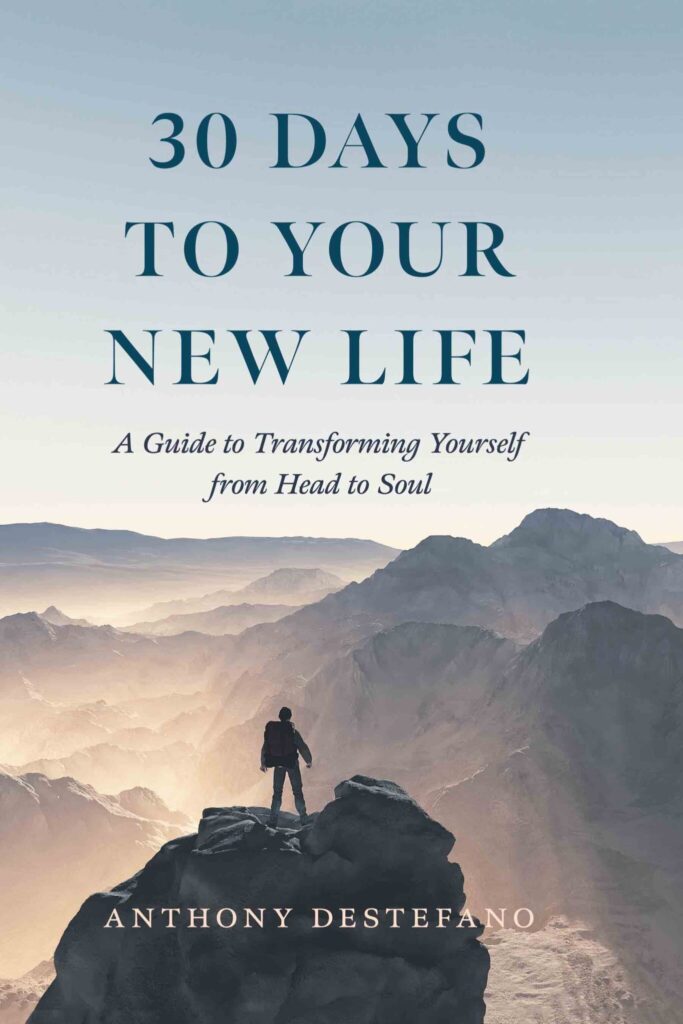
Editor’s note: this article is the fifth of a five-part series. It is adapted from a chapter in Anthony’s forthcoming book 30 Days to Your New Life, available for pre-order at Sophia Institute Press. The book will be released June 20, 2023.