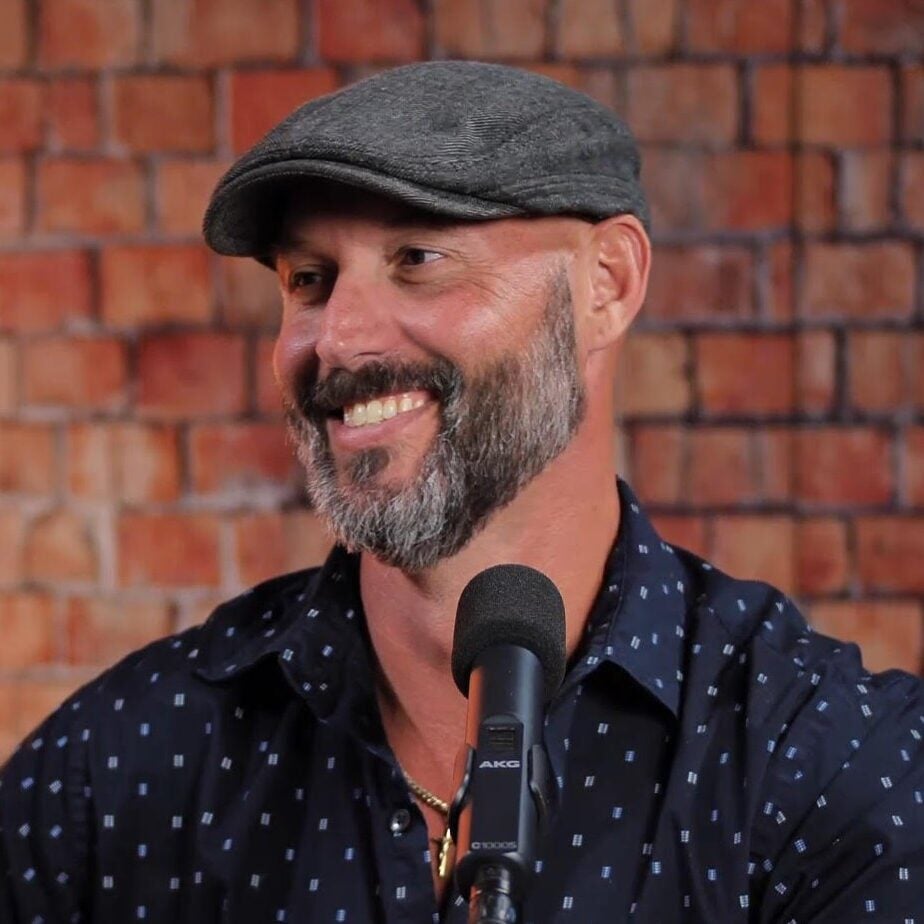
When I boarded the plane to Poland, I thought I was simply heading to a few world premieres of a new movie. I expected a red carpet, some interviews, a bit of content creation, and the thrill of being part of a big release. But what I encountered was far more than a film tour. It became a pilgrimage into a profound encounter with the faith, sacrifice, and legacy of St. Maximilian Kolbe.
From the first day, it was clear I wasn’t just there to record and post. I was invited immediately into a community—ten of us sharing life together in a small Airbnb in Poland—that felt more like family than a production crew.
I watched up close how much this project meant to the team. Writer and director Anthony D’Ambrosio and producer Cecilia Stevenson, the heart and soul behind Triumph of the Heart, weren’t working with a massive studio or Hollywood budget. They were propelled by love for Kolbe, fueled by their faith, and driven by mission. They built a team who shared that same conviction, often working for very little or nothing at all because the goal wasn’t profit or prestige. It was to share Christ and the hope only He can bring.
Their idea was simple but radical: to portray the life of St. Maximilian Kolbe not just as history—but as a call to action for its viewers. His story mirrors Christ’s Passion, and much like The Passion of the Christ did two decades ago, this film has the potential to move a generation into a deeper understanding of sacrificial love.
Warsaw—World Premiere at Luna Theatre
The first premiere unfolded in Warsaw, at the historic Luna Theatre. We began the day not with glitz, but with Holy Mass, anchoring ourselves in prayer and communion. That in itself set the tone: this was bigger than a movie.
Arriving dressed in black, red, and white, the colors of the Polish flag, we stepped onto the red carpet. Cameras flashed, reporters swarmed, Polish TV and radio outlets lined up for interviews. It was surreal. Almost the entire cast and crew was present, each person radiating a joy mixed with reverence for the seriousness of this story.
The screening itself was unforgettable. As the credits rolled, silence filled the theater. I glanced around, there wasn’t a dry eye in the house. My own heart was heavy with both sorrow and inspiration. Then, suddenly, the silence broke into thunderous applause, and the audience rose to their feet. The standing ovation wasn’t just for a film, it was for the message, the sacrifice, and the saint whose life still moves souls today.
Niepokalanów—Kolbe’s Monastery
Next, on the Feast of St. Maximilian Kolbe (August 14), we traveled to Niepokalanów, the Franciscan monastery he founded.
The Adoration chapel took my breath away. Its monstrance was crafted so that the Blessed Sacrament rests at the heart and womb of the Blessed Virgin Mary. The beauty of that design, the Eucharist shining from Mary’s heart, is something I will never forget.
We toured Kolbe’s room, preserved as it was the day he was taken by the Nazis. To place my hand on his desk, knowing that’s where he transcribed his love for the Lord, was deeply moving.
The monastery graveyard also holds an astonishing detail: the grave of Franciszek Gajowniczek, the man Kolbe saved by volunteering to take his place in Auschwitz’s starvation bunker. Kolbe’s sacrifice allowed him to live to age 94, a walking witness of the saint’s mercy and grace.
We also saw Kolbe’s radio station, his bold use of the “new media” of his time to spread the Gospel. Decades ahead of his time, Kolbe had a vision for evangelization that is still bearing fruit today.
Zduńska Wola—Kolbe’s Birthplace
From there, we went to Zduńska Wola, where Kolbe was born in a tiny, crowded home shared by six families. We stood in the very room, even touched the bed where his life began.
On the Solemnity of the Assumption, we attended High Mass at the Cathedral of the Assumption before the film’s third premiere. This screening was particularly powerful because it was attended by Kolbe’s relatives and by descendants of those who suffered in Auschwitz. Their presence made the story intensely personal.
Afterward, we processed back to the cathedral to bring Mother Mary flowers. We were blessed to be able to venerate one of the rarest relics of St. Maximilian Kolbe: a piece of his beard. Since his body was cremated at Auschwitz on the feast of the Assumption, such relics are extremely rare. To kneel before it, and on that very day, in his homeland, surrounded by Polish hymns and flowers offered to Our Lady, was an experience beyond words.
More Than a Movie
Kolbe’s story is not simply about one heroic act of dying for another. It is about how he transformed the darkest place in the world into a sanctuary of light. In the starvation bunker, as nine men faced death, Kolbe led them in hymns, prayers, and psalms. His joy in the face of suffering echoed through the camp, stunning even the guards. St. Francis of Assisi once said, “All the darkness in the world cannot extinguish the light of a single candle.” Kolbe embodied that truth. In Auschwitz, his flame ignited hope in others and continues to inspire us today.
The Mission Continues
Despite all the suffering and evils depicted in Triumph of the Heart, its message of hope is clear. It reminds us how St. Maximilian Kolbe’s life serves as witness to the truth that love conquers hate, sacrifice redeems suffering, and holiness is demanded of us all.
Author’s Note: The film premieres in the United States on September 12, with select pre-screenings nationwide. Visit triumphoftheheart.com to find a screening near you.
Image from www.triumphoftheheart.com